Practical Family Emergency Preparedness: How to Prepare for Power Outages, Storms & Everyday Emergencies
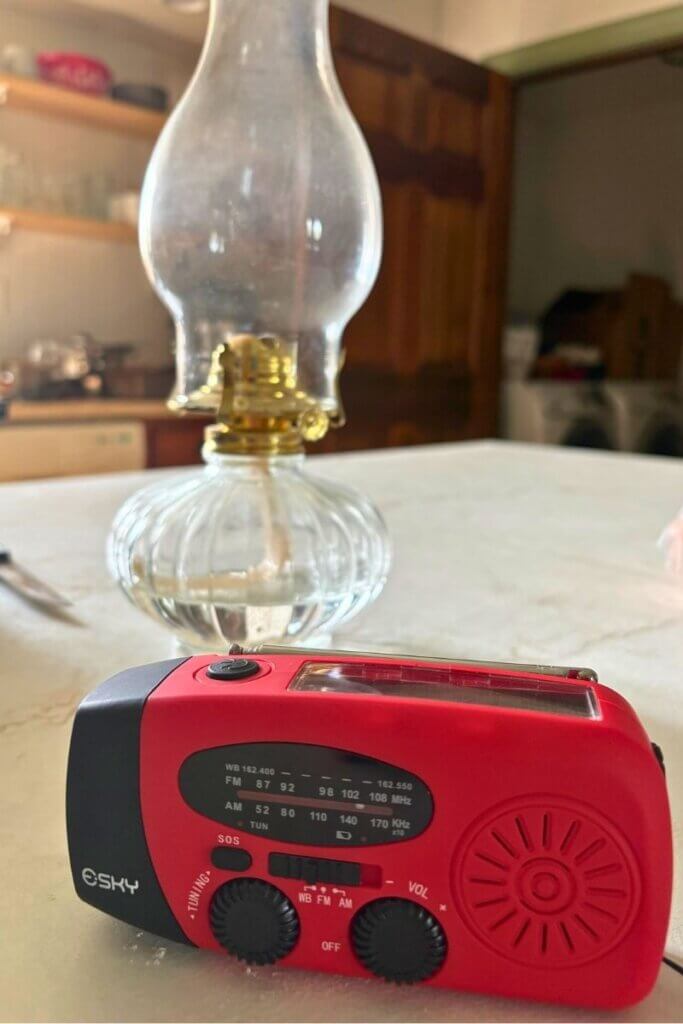
I have always liked the idea of being prepared. Family emergency preparedness can sound like a pretty serious topic, but to me, it’s really just another part of taking care of our home and family.
Not in a stock the bunker because the world is ending sort of way. That’s really not me.
I mean preparedness in the much more ordinary sense of knowing that if the power goes out, the water stops running, a big storm comes through, or we suddenly need to leave home, we can take care of ourselves for a little while.
I think this used to be a much more normal part of homemaking.
Our grandparents and great-grandparents kept food put up, knew how to cook without electricity, kept extra supplies on hand and generally had more ways of doing things when the usual way wasn’t available.
Today, we’re incredibly fortunate to have electricity, running water, grocery stores, furnaces, air conditioning and all of the other conveniences that make our lives easier. But we’re also surprisingly dependent on them.
We got a very good reminder of that this summer.
The Storm That Changed the Way I Think About Preparedness
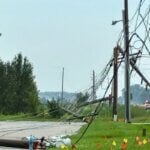
In mid-August, a historic derecho ripped through Northern Indiana where I live.
We lost power for five days.
And wow, what a crash course in preparedness.
This wasn’t just a bad thunderstorm. The August 11, 2026 derecho produced widespread 70–100+ mph straight-line winds across parts of Illinois and Northwest Indiana. The National Weather Service recorded a 99 mph gust in Gary, and later damage assessments estimated winds may have reached 100–110 mph in parts of Northern Indiana. A “land hurricane” is how it’s sometimes described. Some areas were without electricity for more than two weeks afterward.
Read the National Weather Service report on the August 11 derecho
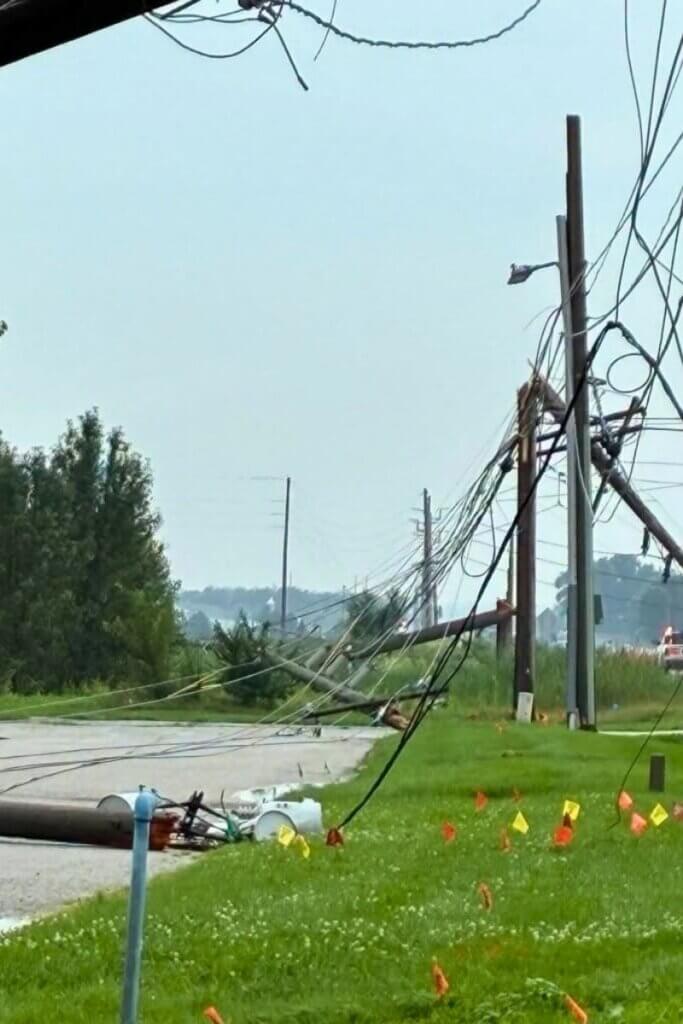
There were huge trees down everywhere. Power lines were down. Houses and buildings were damaged. Roads were blocked.
Grocery stores, gas stations and restaurants were without power (and many more).
And suddenly all those little things you don’t normally think twice about became very important.
How do we get water?
How do we keep the freezer cold?
How much gas do we have for the generator?
How do we cook?
How do we take care of the animals?
What do we do when our phones need charging?
And, perhaps most importantly:
What do we already have that works when the power doesn’t?
Those five days showed me where we were prepared, where we weren’t, and which supplies were actually useful.
So this isn’t meant to be the ultimate guide to surviving every possible emergency. It’s simply what I think an ordinary family should consider having and knowing before you need it.
Preparedness Doesn’t Have to Come From Fear
I want to say this before getting into any lists because I think the word preparedness can sometimes sound a little scary.
I don’t think we need to live our lives worrying about what might happen next.
Quite the opposite, actually.
For me, being prepared gives me more peace, not less.
If I know we have drinking water tucked away, a way to cook dinner, flashlights that actually work, some food in the pantry and a plan for keeping the freezer cold, then I don’t have to panic when a storm is coming.
It’s just another part of taking care of our home.
I think of preparedness much the same way I think about growing a garden, canning food or keeping a stocked pantry. We’re certainly still dependent on plenty of modern conveniences, but we’re trying to keep some of the old skills and common sense that make us a little more resilient when those conveniences aren’t available.
You don’t have to prepare for everything.
Start by preparing for the things most likely to happen where you live.
For us, a long power outage is clearly one of them!
Start With the Basics: What Would Stop Working at Your House?
This is probably the best place to begin.
Rather than buying a cart full of “emergency supplies,” walk around your own house and ask yourself:
What stops working if the electricity goes out?
Then ask:
What happens if it stays out for three days? What about a week?
The answers are going to be different for every family.
For us, I now think about preparedness in a few main categories:
- Water
- Shelter
- Electricity
- Cooking and staying warm or cool
- Food
- Sanitation and cleanliness
- Animals
- Supplies for staying home
- Supplies for leaving home
If You’re Just Getting Started, Begin Here
- Store enough drinking water for several days.
- Make sure everyone has access to a working flashlight.
- Keep several days of food your family already eats.
- Have a way to charge your phones and other essential devices.
- Figure out what absolutely requires electricity in your home.
- Decide how you’ll cook if the power goes out.
- Make a plan for staying warm in winter and cool in summer.
- Keep basic household supplies like batteries, paper goods and wipes on hand.
Now, let’s go through each of these areas and talk about what actually matters.
Water: Where Will Yours Come From?
Water is one of the first things I would figure out. Trust me, you use a LOT more than you think you do.
And before you buy anything, ask a really basic question:
Where does your water come from?
Are you on city water?
Or do you have a well?
Those are two very different situations during an emergency.
If You Have a Well
One of the funny things about having a well is that you can have thousands and thousands of gallons of perfectly good water sitting underneath your property and still not be able to get any of it out of the faucet. Yikes.
Most modern well pumps need electricity.
No power means no pump.
So if you’re on a well, think about how you would get water during an extended outage.
Depending on your particular well and setup, options might include a properly sized generator that can run your well pump or having a manual well pump installed as a backup.
A manual pump is something we’re especially interested in because I love the idea of having a water source that doesn’t require electricity at all.
I have well water. It did nothing while we had no power! I always keep 5-8 gallons of bottled water for drinking in my storage space, and I keep the same amount of potable water for flushing toilets or bathing. This was NOT enough for 5 days. We had to buy more drinking water and run to a friends house with city water. I will be investing in a way to power our well pump soon.
A real MVP was our rain barrel—oh friends! What a gift it was. Our 55-gallon barrel gave us water for flushing toilets, watering the garden and caring for our animals. I highly recommend having one if you have the space.
If You Have City Water
City water may continue working during a power outage, but that doesn’t mean I’d skip emergency water storage.
Water mains break. Municipal systems can have problems. Flooding or other emergencies can sometimes result in boil-water or do-not-drink advisories. Or in the case of this Derecho – there was a boil water notice!
I like to keep at least 1–2 gallons per person per day on hand, and after our five-day outage, I learned that two days’ worth disappears very quickly. Ideally, work toward having several days’ worth stored.
Don’t Forget Water for Everything Else
This was something I hadn’t fully appreciated.
Drinking water is obviously the priority, but think about how much water you normally use for:
- Cooking
- Washing hands
- Cleaning
- Washing dishes
- Flushing toilets
- Pets
- Chickens and livestock
- The garden
That’s where alternative sources can be really helpful.
A rain barrel, for example, can give you a reserve of water for certain non-drinking purposes. Just remember that water collected from a roof shouldn’t automatically be considered safe drinking water.
Most of us know when a bad storm is coming. If you do, fill up a bunch of water storage containers like these. And always have water stored anyway.
We have one of these personal water filters for everyone in our home.
A rain barrel is SO important to have especially if you garden and have animals.
I’m going to write a separate post specifically about emergency water because there is a LOT more to this one.
Electricity: Decide What You Really Need to Keep Running
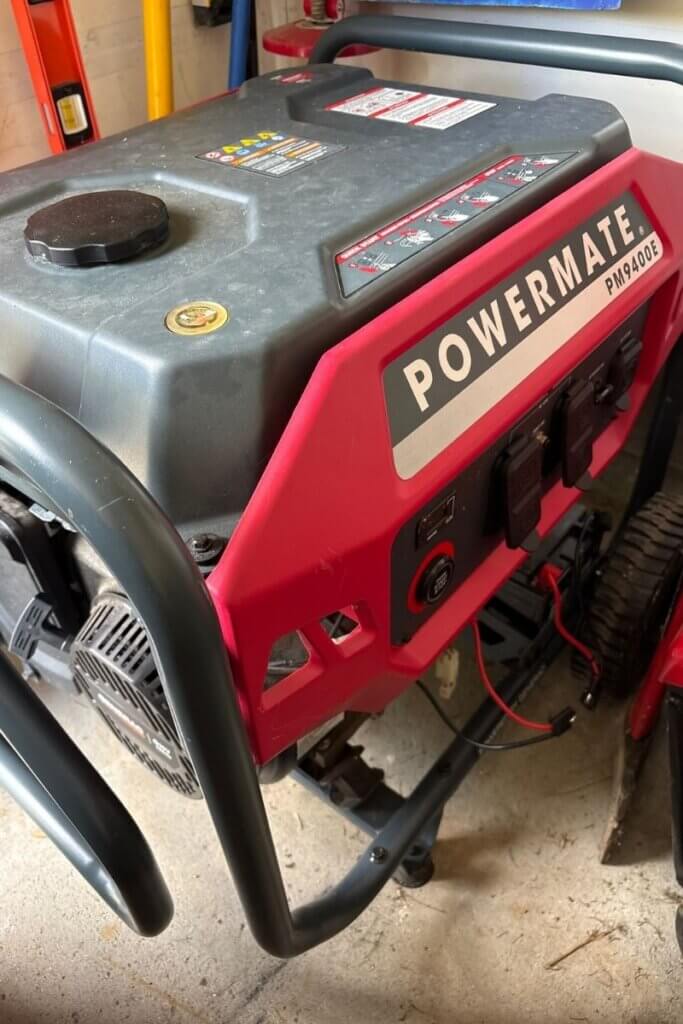
Our generator was the most valuable things we had during those five days.
But here’s what I realized:
You don’t necessarily need to recreate normal life.
You need to keep the important things working.
For us, one of the biggest concerns was our food.
We have freezers full of meat and other food we’ve worked hard to raise, grow, buy and put away. Losing a freezer full of food would be a tremendous waste and expense.
So keeping the freezer cold was much higher on my priority list than, say, being able to run the dishwasher.
Think about your own house.
What really needs power?
It might be:
- Refrigerator and freezer
- Well pump
- Medical equipment
- A few lights
- Phones
- Fans
- Internet equipment
- Certain appliances
Once you know that, you can make a much better backup-power plan.
For some families that might mean a generator. For others, a portable power station and some smaller power banks may cover the most important needs. (Amazon affiliate links below – thank you for using our links!)
This is the Generator we have: Powermate PM9400E
Extension cords: You’ll need heavy duty extension cords for your generator, with enough length to reach all of the appliances, etc you want to power.
Gas cans: The gas generator doesn’t work without gas! Make sure you have enough cans to give you several days of power at a time. That’s probably 4-5 five gallon cans. Amazon is crazy expensive for these, so just shop at your local big hardware store and pick up a few.
We do not own a solar/battery generator (yet!) but I have my eye on these when we can make the investment.
A Very Important Note About Gas Generators
If you use a fuel-burning generator, never, never, never run it inside your house, garage or another enclosed space. Carbon monoxide can build up without you realizing it.
And if you have a Generac whole home generator, get it serviced regularly. Our neighbor had a scary situation involving carbon monoxide because it wasn’t installed properly.
Follow the manufacturer’s instructions for safe placement and operation, and make sure you have working carbon monoxide detectors in your home.
Light: Keep It Simple
We have candles—and being a beeswax candle maker, you know I certainly wasn’t short on those!
But I wouldn’t rely on candles alone.
A few good LED lanterns and flashlights are wonderful to have around because you can hand one to each person and move around the house normally.
Headlamps are especially handy because you can actually use both hands while you’re cooking, fixing something or tending animals after dark.
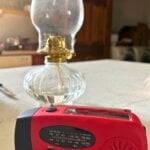
At night using just one rechargeable lightbulb (this is the kind I have!) for a lamp in the living room gave just enough light to live by.
I’d keep:
- Flashlights
- Headlamps
- LED lanterns (solar charging kind!)
- Extra batteries
- Rechargeable lights
- Candles
- Matches and lighters
And here’s the important part:
Keep them somewhere you can find them in the dark. We have a tote that’s labeled and it stays put. I know exactly where they are when I need them.
That sounds obvious until the lights suddenly go out and you’re opening drawers with the flashlight on your phone. Ask me how I know. 😉
Our Favorite rechargeable lanterns



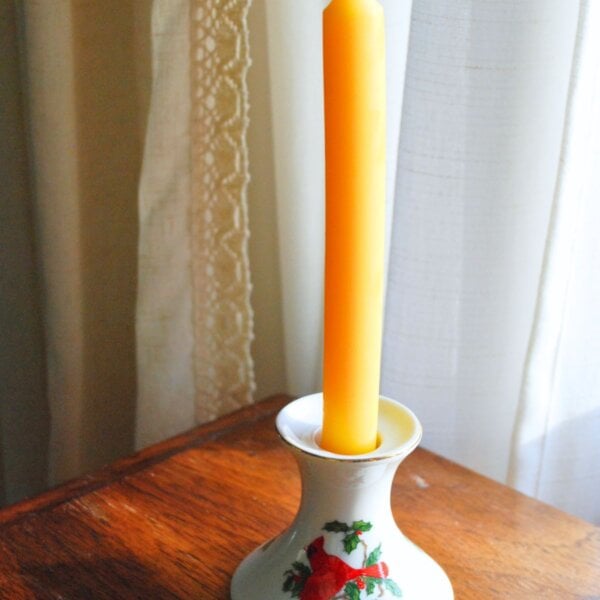


Beeswax 8″ Taper Candles – 2 Pack
Light up your home with our 8” beeswax taper candles! Made from 100% pure beeswax, they burn clean, last long, and fill your space with a soft honey scent. Perfect for cozy nights, special dinners, or as a thoughtful gift. Simple, natural, and beautiful. You’ll love them!
Heat Means Two Things: Heating Your Family and Heating Food
When we talk about emergency heat, I think we tend to picture a January blizzard.
But our outage happened in August.
We weren’t trying to stay warm. We were trying to stay cool.
That’s why I think every family’s plan should account for both extremes.
Keeping Your Family Warm
If you live somewhere with cold winters, consider what would happen if your main heat source stopped working.
Do you have:
- Plenty of blankets?
- Warm clothing?
- Sleeping bags?
- A wood stove or other safely installed backup heat source?
- Enough fuel for that heat source?
You don’t necessarily need to heat your whole house. Depending on the emergency and your house setup, keeping everyone together in a smaller safe area may be much more practical.
If you don’t have a fireplace: A generator can still give you several good options for staying warm. Depending on the size of your generator and your home’s setup, you may be able to safely power your furnace with a properly installed transfer switch, interlock or another manufacturer-approved setup. If that means nothing to you, you’re not alone! I had to dig into some research and find a safe way to do this. Contact an electrician you trust and ask him!
Another option is to use one or two electric space heaters that your generator can safely handle. Rather than trying to heat your entire house, focus on keeping one smaller room comfortable and make that your family’s “warm room” during the outage.
Rather than trying to heat the entire house, choose one smaller room as your family’s “warm room,” close off unused rooms, block drafts and gather everyone there with blankets and sleeping bags. And have a plan for where you’ll go if the house becomes too cold to safely stay.
Keeping Your Family Cool
Summer outages have their own challenges.
Battery-powered or rechargeable fans suddenly become incredibly valuable.
So do shade, open windows when weather conditions allow, plenty of drinking water and simply knowing which parts of your home stay coolest.
We bought a portable A/C unit (like this one!) that plugged into the generator. WHAT A BLESSING. My goodness, not sweating through the night is a luxury I’m not embarrassed to say I need. Ha!
How Will You Cook?
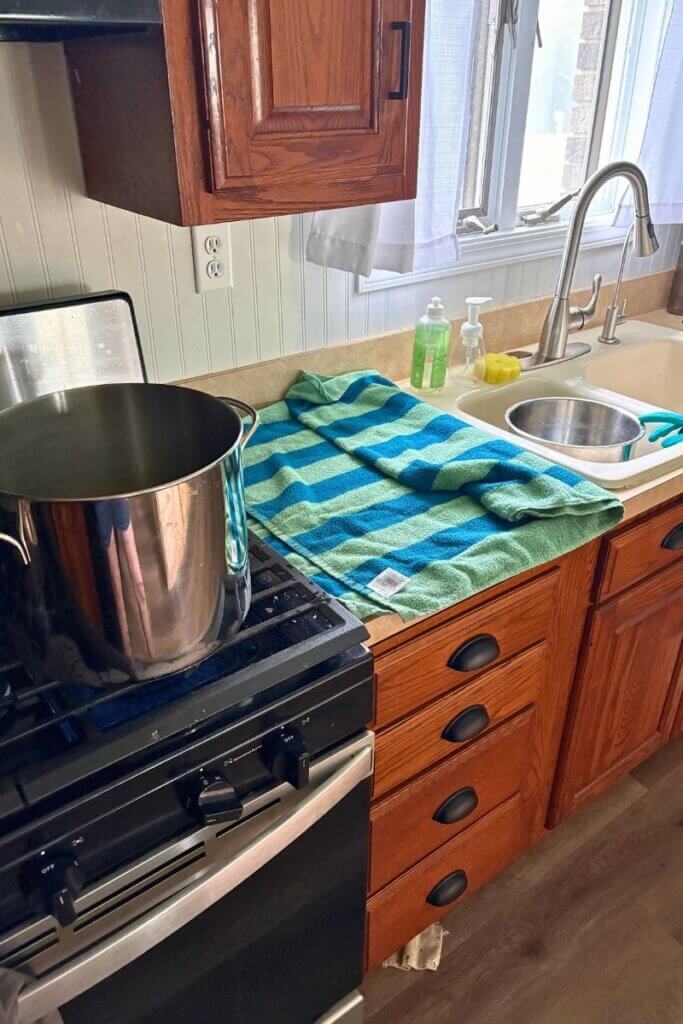
This is one area where a little old-fashioned know-how goes a long way.
If your stove doesn’t work without electricity, what is Plan B?
Depending on what you already own, you might use:
- An outdoor grill
- A camp stove
- A safe outdoor propane burner
- A wood cookstove
- A fire pit or outdoor cooking setup
The key word here is outdoor for grills, camp stoves and other fuel-burning cooking equipment that isn’t designed and installed for indoor use.
However, if you have a gas stove there’s lots you can do! If you have a generator then get yourself an electric stovetop. They are great!
And this is another reason I love keeping a well-stocked pantry.
An emergency isn’t the time I want to discover that every meal in my house requires six appliances and 45 minutes of cooking. You know what I mean?
Simple foods are your friend.
Basically we enjoyed anything cold or anything that could be cooked in a skillet. Eggs, sandwiches, rice, pasta, dried or cured meats, etc. Lots of fruits and fresh vegetables!
Food: Start With What You Already Eat
You do not need a closet full of expensive “survival food.”
I would much rather have a pantry full of normal food my family already eats.
Canned meat, beans, fruit, vegetables, peanut butter, crackers, bread ingredients and simple pantry meals can carry you through quite a bit.
If you preserve food at home, this is another place where canning suddenly makes a lot of sense.
A jar of food sitting on the pantry shelf doesn’t care whether the electricity is on.
That’s pretty wonderful.
Make my ground beef salami recipe and keep it in the freezer! It’s great protein to have during a power outage.
Staying Clean When Water Is Limited
This is the decidedly unglamorous part of preparedness.
But after living without normal utilities, you start appreciating things like baby wipes and paper plates a whole lot more.
If water is limited, the last thing I want to do is use our precious drinking water washing a mountain of dishes.
This is why I like the idea of keeping one simple emergency household tote.
Not survival gear. Just useful stuff.
Ours can contain things like:
- Paper plates and bowls
- Disposable utensils
- Paper towels
- Napkins
- Toilet paper
- Baby wipes
- Trash bags
- Basic cleaning supplies
- Matches and lighters
- Extra batteries
You can grab the whole tote when you need it instead of searching through the house.
And most of these are inexpensive things you can pick up gradually.
I’m putting together a separate post showing exactly what I’d keep in ours.
Don’t Forget About Your Animals
This is a big one for homesteading families.
The electricity might go out, but the chickens don’t particularly care. They still need water, food, shelter and care whether it’s convenient for us or not.
So think about:
How much water do your animals need every day?
And then:
Where will that water come from if your normal system stops working?
Also consider how much feed you normally keep on hand.
I’m not suggesting you need six months of chicken feed sitting in the barn. But if roads were blocked or stores were closed for several days, would you have enough?
Other things worth thinking about are carriers or crates for pets, basic animal first-aid supplies, temporary fencing and what you would do with your animals if you actually had to leave the property.
Thankfully, we had plenty of food for our ducks and chickens and our rain barrel provided plenty of water.
In a pinch, it’s helpful to know what exactly chickens can eat: read about that here!
Have Two Different Emergency Kits
This distinction has helped me organize preparedness in my own mind.
I want two completely different things:
1. A Go-Bag
This is the bag for:
We need to leave. Now.
Parents! You need to have this one on hand. We have had the unfortunate need to leave for the hospital at three in the morning – multiple times. Severe croup is awful.
It’s not supposed to contain everything we could possibly want.
It’s enough to get our family through the first couple of nights without running around the house trying to pack while something stressful is happening.
I’d include things like clothes, toiletries, important medications, copies of important documents and emergency information stored securely, chargers, a power bank, snacks, water, basic first aid and necessities for the kids.
Don’t forget a deck of playing cards, wordsearches, stickers, a story book or anything else that will bring some joy and pass the time.
Think through: What would we need for two days if we had to leave the house immediately?
2. A Household Emergency Tote
This is the opposite.
We’re staying home, but normal conveniences aren’t working.
That’s where the paper goods, wipes, flashlights, batteries and other practical supplies live.
I really like separating these two because otherwise “emergency supplies” turns into a giant pile of stuff without a clear purpose.
The Part of the Power Outage I Didn’t Expect
The first thing I remember thinking after the storm was, Is our extended family okay? What about our friends? Our neighbors?
It didn’t take long to see people—including my husband—heading out with chainsaws to clear roads or simply going to check on neighbors.
Cell service was basically gone. Text messages weren’t going through, and even making a phone call was hit or miss. So much of our normal communication had suddenly disappeared.
“Are you okay? Do you need anything?” seemed to be on the tip of everyone’s tongue.
At our house, we got to work setting up the generator and making sure the sump pump was running. We had nearly 10 inches of rain in less than 48 hours, so keeping water out of the basement was pretty high on the priority list!
But for all the inconveniences of those five days, there was one part of losing power that I wasn’t expecting at all: the peace.
So much of our modern world requires electricity and the internet to work, communicate and get things done. For five days, most of that was simply gone.
And I really enjoyed it.
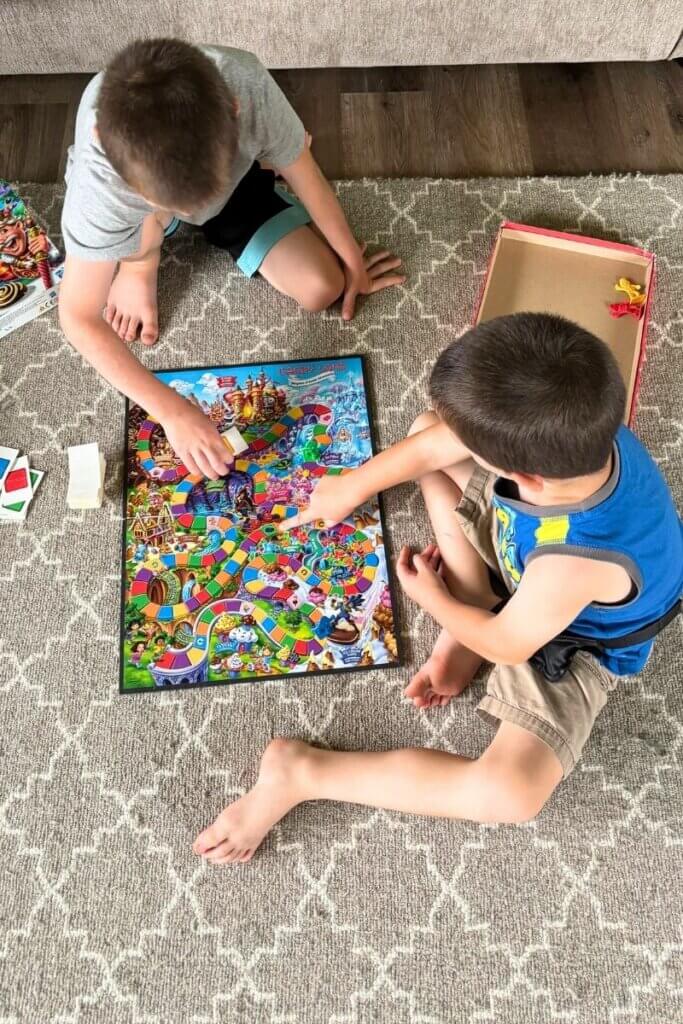
I spent more time with my kids. We read books, played games, went to bed earlier and just spent more time together without the usual distractions.
And let me tell you, having boys who are already being raised with very little screen time was such a blessing. They didn’t skip a beat when the power went out. They found things to do, played games and carried on with their days.
There were plenty of things about those five days that I was very happy to have back when the power finally came on. But the slower pace and the extra time together? That part I wouldn’t have minded keeping.
You Don’t Need to Buy Everything at Once
If you’ve gotten this far and are now mentally calculating how much it would cost to buy generators, water tanks, power stations and every other thing I’ve mentioned—don’t!
That’s really not the point of this post.
Look around your house first.
You probably already own quite a bit of what you need.
Then think about the weak spots.
Maybe this month you put away some drinking water and make sure everyone has a flashlight.
Next month you put together your household emergency tote.
Maybe after that you work on your go-bag.
A generator might be something you save for over time.
And there are also skills that cost almost nothing to learn.
Learn how to cook outside. Learn how your well works. Know how to shut off the water or gas to your house. Learn to preserve food. Keep a garden. Know your neighbors.
Preparedness doesn’t need to become another enormous project on your to-do list.
Just become a little more prepared than you were yesterday.
The Supplies We Were Most Thankful to Have
After actually going through a five-day power outage, there were definitely some things we appreciated more than others.
I’m only including things here that we actually used, own or genuinely think would have made our experience easier.
Our most useful emergency supplies:
Most Helpful thing to have….. A Generator: Generac Generator with 9400 start up watts. We have a Powermate with similar power to this one and it’s a VERY powerful generator. We LOVE it. You can find Powermate at Menards. I will have a blog post very soon all about choosing a generator!
LED lanterns: We have four of these. Don’t mess around!! Get several and make sure they have different ways of powering them. These are solar, battery and USB powered – you can use whatever you have at the time you need it.
Power banks: Another must have for charging your phone or other essential small devices.
Water storage: This one is up to you depending on how long term you want to store your water. You can actually CAN water in mason jars! You can store it for a short time in bottles. Or you can buy something like this: Water Storage Cube.
Heavy-duty extension cords Make sure you buy enough length and cords for your needs!
Headlamps get enough for the kids, too.
This post contains affiliate links. This means I may earn a small commission if you purchase something through one of my links, at no additional cost to you. I only share products I use or genuinely recommend. Thanks for your support!
What Five Days Without Power Taught Me
I came away from those five days wanting to be better prepared, but not because they made me afraid of the next storm.
If anything, it was the opposite.
There is a certain amount of peace that comes from realizing you actually can manage when things don’t work the way they’re supposed to. We figured things out. We adjusted. We found different ways to cook and get things done. We took care of our animals, kept the important things running and helped each other where we could.
There were definitely things I wished we’d had, and there are things we’re going to do differently because of what we learned. That’s really what preparedness looks like to me now. It’s not trying to predict every terrible thing that could happen. It’s looking at the life you already have and asking, “If this one convenience disappeared for a few days, what would we need?”
Maybe that’s extra water in the basement. Maybe it’s a generator. Maybe it’s a stack of paper plates, a good flashlight and enough chicken feed to get through the week.
And maybe part of it is simply learning how to do a few things the old way again.
I’m grateful the electricity came back on. I was very happy to have my normal kitchen and running water again! But I’m also grateful for what those five days showed us.
We were reminded how much we already know how to do, where we could be better prepared, and how incredibly valuable it is to have good people around you when something unexpected happens.
And that’s the kind of preparedness I want for our family.
Not fear.
Just the quiet confidence of knowing we’ll probably be okay if the lights don’t come back on right away.
If you found this article helpful, please share on your social media pages! A lot of care and thought went into this blog post and I’d love for it to help as many people as possible. Blessings! -Rachel




Such a thorough, helpful list!
So very helpful! A great post to save for later!
This is all such helpful food for thought! We, too, were prepared in many ways and not so much in others.